
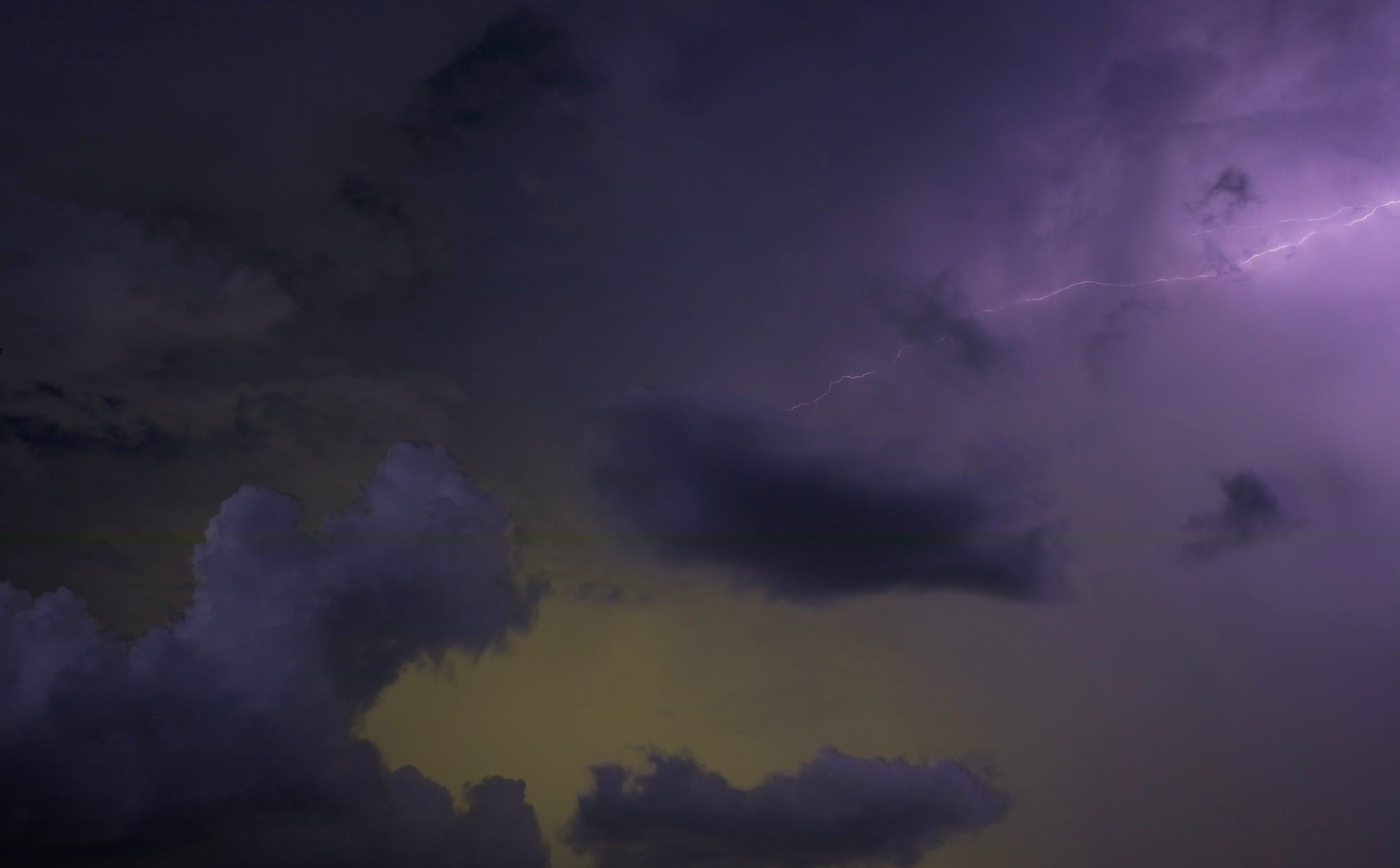
So while my home state of Florida has been listed as the lightning capital of the world, unfortunately, it’s not true. But, it is the capital of the continental United States, with the most density of lightning strikes with a corridor running from Tampa to Orlando. The actual world leaders are Northwestern Venezuela, the Congo Basin in Africa and Singapore.
Nevertheless, the chance to see lightning or hear thunder is accelerated in the hot and humid summer months to the point of hearing every day for weeks on end. This resulted in giving me a lot of experience in photographing lightning, primarily at night. I started out in the film days where it was hit or miss, and now in the digital photography age, participating in the digital imaging of lightning is much more streamlined and pleasing.
How I Do It
All of the photos here were made with a Canon EOS 5DSR (50 MP) with a Canon 16-35mm F4 IS, mounted on a tripod.
All settings were set to manual for the aperture, shutter speed, and focus. Only the lens’ image stabilization feature was left active. I chose an aperture of F5.6 with an ISO of 400. The lens was focused to infinity. I press the shutter release button and wait for something to flash. When it does I immediately release the button and press it again for the next frame. With an active storm this can be anywhere between 3 to 15 seconds. It’s best to not open the aperture for too long or else color artifact noise will accumulate.
Keep in mind I’m not saying this is how it should be done. Everybody has their methods and practices. This is the workflow that I have developed.
All images have been cropped for composition. The white balance has been thrown off so I left the images as they were, straight out of the camera. It would probably be more accurate to convert them all to black and white.
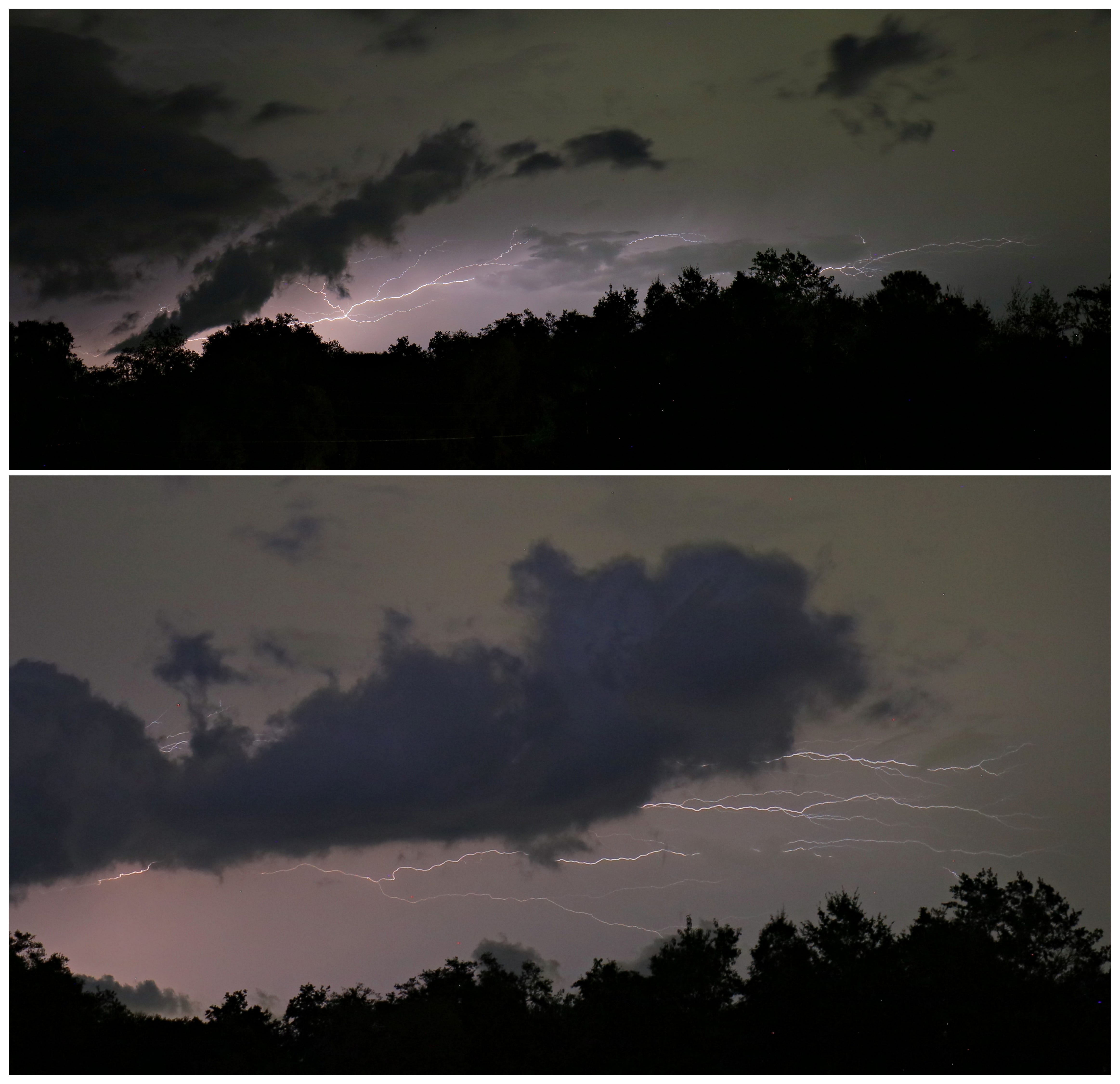
I combined both of these images together because they were the main action of the night. Obliviously, cloud to cloud lightning produces these horizontal bolts. It was quite active at this time and occurred about 4 times, always from left to right. I missed two being distracted but managed to capture the two here. This view, to the east, had a large concentration of electrical connectivity for this often repeated pattern.
Top, 13.4 sec exposure.
Bottom, 14.1 sec exposure
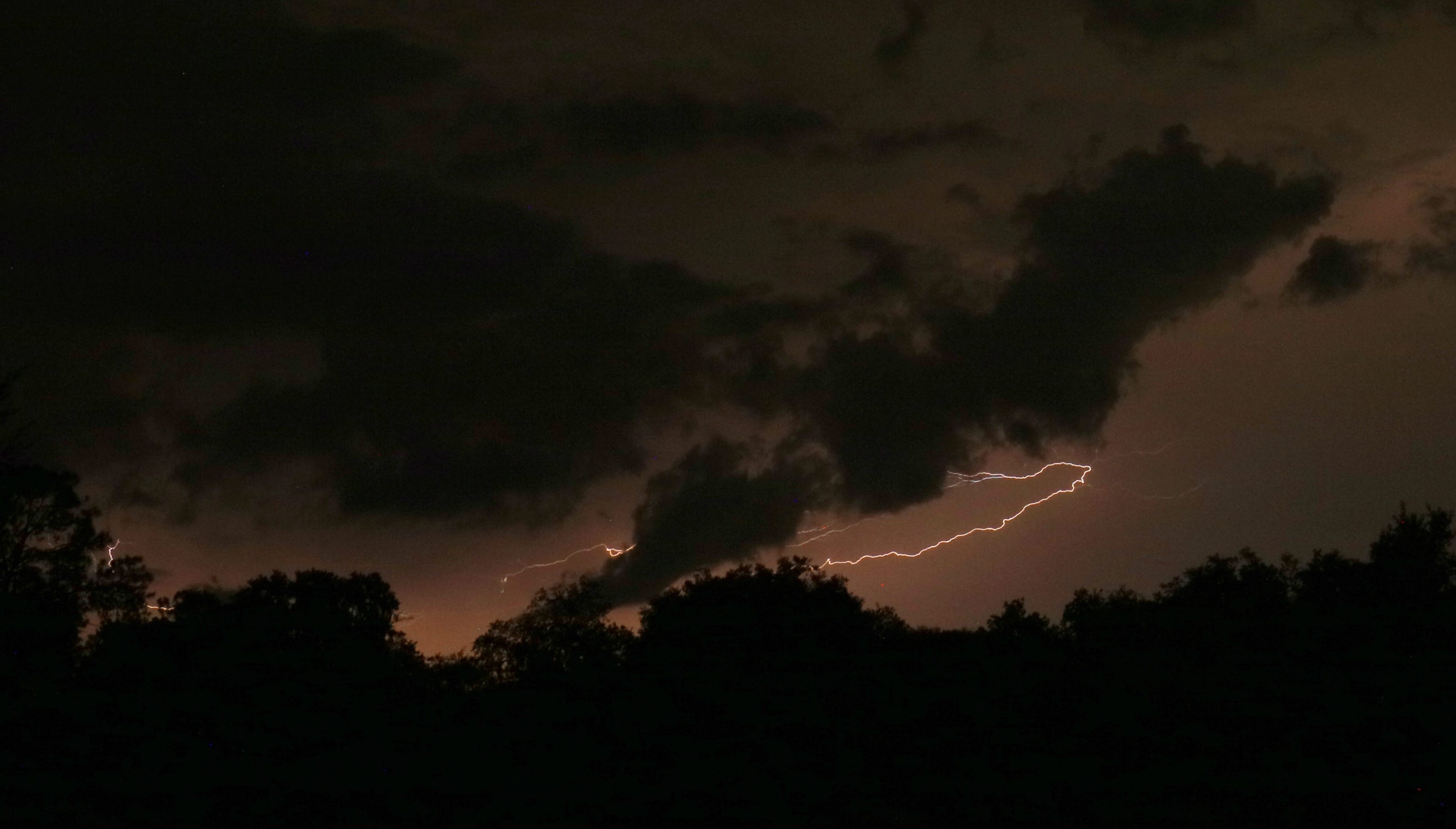
This bolt skirted around all over the place in a wild curved burst till it made the connection. Fleeting such as all the others.
3.9 sec exposure.
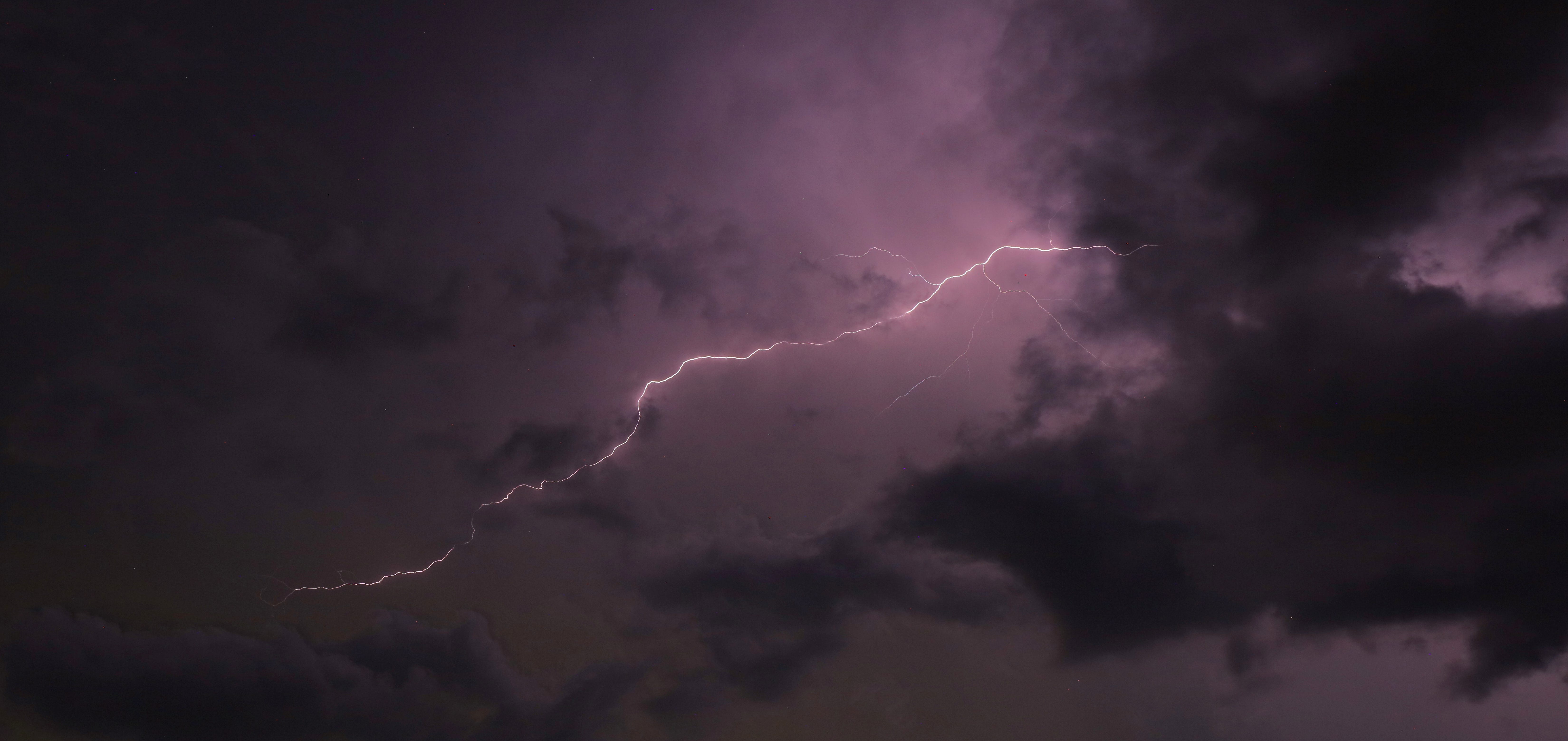
Like a purple stab in the dark this bolt launched to my right and I didn’t get a good look at it at the time.
8.8 sec exposure.